Showing posts with label Socio-Economic Impact. Show all posts

Tuesday, October 21, 2008

[PBN] World Food Day report highlights regional crisis

From: Relief Web - 16/10/2008

Food insecurity in the East Asia and Pacific Region is fast becoming a chronic problem, with a report released today showing that people in parts of East Timor are now facing up to five months a year without enough food to eat, according to international aid agency Oxfam.

Speaking on World Food Day, Oxfam Australia Executive Director Andrew Hewett said much of the region was being hit hard by the food crisis in both urban and rural areas due to increasingly erratic weather, increased biofuels production and growing consumer demand in China, India and advanced Southern countries.

"The World Bank estimates that the food price crisis will plunge an additional 100 million people into poverty, and has wiped out the last seven years of reductions in poverty," Mr Hewett said.

Mr Hewett said a survey prepared last year and released in Australia today by Oxfam, the Christian Children's Fund, Concern Worldwide, CARE International Timor-Leste and supported by the European Commission Food Security Program, showed increasing food shortages in East Timor.

Key findings of the survey, which was conducted in the districts of Manatuto, Liquica, Manufahi, Bobonaro, Oecusse, Covalima and Lautem, included:

1. Diets lack protein and throughout the survey area the number of children under 5 suffering from chronic malnutrition ranged from 50 per cent to 59 per cent.

2. More than 70 per cent of households surveyed were "food insecure" - that is, not confident they would find enough to eat each day; in some areas as high as 90 per cent.

3. An urgent need to invest in small scale farmers to support variety and quantity of crops.

Mr Hewett said East Timor was just one of the countries being hit hard by the global food crisis throughout the region.

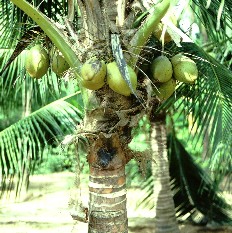
"In Cambodia, rice farmers are struggling to feed their family with a recent survey showing 2.6 million people are facing food insecurity, while in the Solomon Islands our staff there are finding anecdotally that children are getting just one small meal a day for dinner and other than that are surviving on green coconuts," Mr Hewett said.

"Oxfam is responding to food shortages in countries like Indonesia by working with communities to try different and more sustainable agricultural practices."

Mr Hewett said the Australian Government had begun to recognise the problem, contributing $30 million to the World Food Program, $50 million to the World Bank and making a number of commitments in countries like Indonesia and Ethiopia to address the immediate severity of the crisis, but he called on the government to show leadership in seeking long term solutions.

"The government needs to scale up immediate assistance in the region and on the micro level fund programs that work closely with small communities to develop sustainable agricultural plans," Mr Hewett said.

"More broadly the Rudd Government can lead a renewed push on global trade talks to end US, European and Japanese subsidies on their own domestic agricultural products at the expense of developing country farmers."

For more information or to interview Andrew Hewett, please contact: Kate Thwaites, International Programs and Emergencies Media Coordinator on 0407 515 559


Tuesday, October 14, 2008

[PBN] UN report calls for scrapping of biofuel targets

From: Business Daily - 10/10/2008
Calls to scrap biofuel targets to lower food prices are mounting with both the UN’s food agency and global businesses including Unilever urging governments this week to rethink their policies.
The UN Food and Agriculture Organisation (FAO) said in a report this week that the rush to biofuels had done more harm, pushing up food prices, than it has good by reducing greenhouse gases.
At the same time, the Commonwealth Business Council (CBC), the business arm of the group of 53 Commonwealth countries, called on member states finance ministers meeting in St Lucia to drop mandatory targets for biofuels.
Diversion of crops to producing biofuels, as well as rising demand for food in emerging economies, has put major pressure on stocks, pushing food prices to their highest level since the 1970s.
The effects are being felt around the world, including in Kenya, which imports rice and wheat.
FAO expects the global costs of importing food to increase 26 per cent this year to $1,035 billion.
Current targets set by the US, Europe and other governments, to boost biofuel production would increase maize prices by 26 per cent within the next decade, according to the International Food Policy Research Institute.
“Moving away from biofuels quotas is a simple step we can take to help alleviate high food prices,” said Dr Mohan Kaul, director general of the CBC.
The group wants the UK and India in particular to scrap their biofuel targets. In the UK, biofuels must make up 2.5 per cent of transport fuel since April, increasing to 5 per cent by 2010.
India agreed last month to meet 20 per cent of its diesel demand from fuel derived from plants by 2017. If these countries agreed to remove their targets, they could provide a powerful example to the rest of the world, said Dr Kaul.
The goal is ambitious. Though the UK is said to be reviewing its target, the EU has recently re-confirmed its 10 per cent quota for biofuels in petrol and diesel by 2020 while the US, which uses more than a third of its corn crop for biofuel and the world’s leading producer, has shown no sign of rethinking its targets.
Sentiment against biofuels is increasing however with recent studies suggesting that some are not as good for the environment as once thought. Crops like corn or sugar are renewable but more fuel is needed to grow and process them into fuel.
In some cases, forest is cleared to grow new crops, releasing more unwanted carbon dioxide into the air.
“In many cases, increased emissions from land-use change are likely to offset or even exceed the greenhouse gas savings obtained,” FAO said in its report.
With multinational Unilever and other CBC members such as steel group Arcelor Mittal now also taking a stand against biofuels, policy makers may come under more pressure to review targets.
Unilever wants the focus to shift to second and third generation biofuels, or those that use non-food crops such as jatropha or algae, rather than the first generation biofuels made with maize or sugar.

[PBN] Biofuel boom threatens food security, UN agency warns

From: AFP - 08/10/2008

The UN food agency cast doubt Tuesday on the potential of biofuels to help reduce greenhouse gas emissions while warning that their development threatens food security.

"The expanded use and production of biofuels will not necessarily contribute to reducing greenhouse gas emissions as was previously assumed," Food and Agriculture Organisation Director General Jacques Diouf told a news conference.

The FAO also warned that massive subsidies in wealthy countries limit opportunities elsewhere to profit from the boom in biofuels.

"Trade policies vis-a-vis biofuels discriminate against developing-country producers of biofuel feedstocks and impede the emergence of biofuel processing and exporting sectors in developing countries," the FAO's annual flagship report said.

Diouf, unveiling the report, urged a review of policies on subsidies, tax incentives, tariffs and mandated blending of biofuels with fossil fuels.

The FAO also predicts that food prices will continue to rise as demand grows for biofuels despite their limited importance in terms of global energy supply.

"The risks for food security concerns loom large," Diouf said.

"While some of the other factors may subside, growing demand for agricultural products for the production of biofuels will continue to put upward pressure on food prices for a considerable time to come," he added.

Biofuel production using agricultural commodities more than tripled from 2000 to 2007, and now covers nearly two percent of the world's consumption of transport fuels.

The report, titled "Biofuels: Prospects, Risks and Opportunities," finds that while biofuels will offset only a modest share of fossil energy use over the next decade, they will have much bigger impacts on agriculture and food security.

"We hope that, in general, countries that are pushing for rapid expansion of biofuels will reconsider the pace of that expansion," said FAO expert Keith Weibe.

Diouf also voiced concern that the financial crisis sweeping the world will divert attention as well as "capacity, willingness (and) priority that governments will be giving to the issue of food security."

Brazil's sugarcane-based ethanol is the only biofuel that can compete with fossil fuels, the report said, noting that its production costs are the lowest.

"Even taking into account recent rises in oil prices, among the major producers only Brazilian sugar-cane ethanol currently appears to be competitive with fossil fuel counterparts without subsidies."

Wiebe told the news conference: "Our analysis shows that if support measures (subsidies) were reduced or eliminated, global levels would fall but Brazil's would increase."

"The challenge is to reduce or manage the risks while sharing the benefits more widely," Diouf said. "The outcome depends on the specific context of the country and the policies adopted."

The FAO chief wrote in the report: "The emergence of biofuels as a new and significant source of demand for some agricultural commodities -- including maize, sugar, oilseeds and palm oil -- contributes to higher prices for agricultural commodities in general, and for the resources used to produce them.

"For the majority of poor households who consume more food than they produce, higher prices can pose a serious threat to food security -- especially in the short term," he said.


Friday, August 15, 2008

[PBN] Jatropha - What The Public Should Know

From: Inquirer .net - 09/08/2008

An interesting article - opinion on jatropha and jatropha biodiesel from Professors Ted Mendoza, Oscar Zamora and Joven Lales are on the Faculty of Crop Science, the College of Agriculture, University of the Philippines in Los BaƱos, Laguna.


Monday, July 28, 2008

[PBN]East Timor: Fretilin party says East Timor failed to consult on biofuels

From: ABC Radio Australia - 26/07/2008
East Timor's Fretilin Party says the government has failed to consult the public about its plans to develop a biofuel industry.

The party's Jose Teixeira says the government is planning to use 300 thousand hectares of land in East Timor for the production of biofuels.

Radio Australia's reporter in Dili, Christine Webster, says Fretilin MP Jose Teixera says it is concerning the government wants to use more than half of East Timor's arable land to produce biofuels.

He says this land should be used to cultivate food crops such as maise, rice and cassava.

"There is quite clearly now a policy , which has been implemented of giving large tracts of arable land for the purposes of biofuel agriculture. That is unacceptable because there has been no public debate about it."

Mr Teixera says mechanisation is still not used in East Timor when it comes to crop production.

He says it would be extremely difficult for these people to make the transformation to large scale agriculture.

East Timor is currently experiencing a food crisis like much of Asia.

Mr Teixera says the focus should be on addressing the food shortage rather than producing bio fuels.

Monday, July 14, 2008

[PBN] Interesting articles on food prices and Biofuels

From: Google Search Engine

Interesting readings from the following links on food security/prices and biofuels.
1. Rising food prices: Policy options and World Bank response - http://siteresources.worldbank.org/NEWS/Resources/risingfoodprices_backgroundnote_apr08.pdf

2. Rising Food Prices in East Asia: Challenges and Policy Options - http://siteresources.worldbank.org/EASTASIAPACIFICEXT/Resources/EA_Rising_Food_Prices050508.pdf

3. How biofuel policies are deepening poverty and accelerating climate change - http://www.oxfamfrance.org/pdf/rapport_oi_biocarburants_verite-qui-derange_250608_en.pdf

4. The right to food and the impact of liquid biofuels (agrofuels) - http://www.globalpolicy.org/socecon/hunger/general/2008/05right2food.pdf


Friday, July 4, 2008

[PBN]: World Bank report: biofuel caused food crisis

From: The Guardian - 4/07/2008

An interesting article on biofuel and its effect on global food prices

Monday, June 23, 2008

[PBN]Fiji: Ethanol, food security linked

From: Fiji Times online - 22/08/2008

FOOD security is not only about production but affordability and accessibility, says national committee on bio-fuel deputy chairman, Aliki Turagakula.

Mr Turagakula said the establishment of an ethanol plant would provide an alternative to fresh cassava through cassava flour which is processed after starch is extracted from cassava tubers for ethanol.

He said affordability is when people have the purchasing power to buy the food they want.

"When they grow cassava they get $10,000 per hectare of cassava. So their purchasing power increases. They have the power to purchase whatever food they want," he said.

"It's also about accessibility. We have access to buy more food because of the income generated from ethanol.

"The product we produce at the factory after we extract the starch still has protein which is ground into cassava flour. So that is an addition and cheaper food source to supplement expansive flour made from wheat."

He said the committee was trying to address the importance of reducing costs on fossil fuels and the Kyoto Protocol.

Mr Turagakula said by 2015 Fiji must reduce its green house gas emission by 50 per cent.

He said the Government has put in place an energy policy.

"This year we are required to increase the proportion of use of bio fuel by 10 per cent and reduce the cost of fuel to 90 per cent. Next year it will be 80 to 20. So by 2015 it should be up to almost 40 per cent."

Saturday, June 21, 2008

[PBN] Biofuel and global biodiversity

From: Institute for Agriculture and Trade Policy, April 2008

This paper, written by D. Keeney and C. Nanninga, analyzes how biofuels are changing land-use patterns in many regions around the world. The paper suggests that the impacts of biofuels are more symptomatic of inappropriate agricultural production systems and policies, and recommends protecting native ecosystems and indigenous lands, making sustainability a priority for all biofuel production, and taking advantage of this opportunity to redesign the agricultural and energy sectors.
The paper can be sourced from the following link: http://www.agobservatory.org/library.cfm?refid=102584

Tuesday, June 17, 2008

[PBN] Critics Weigh Into Biofuels

From: Australian News.Net - 31/05/2008
Once touted as one of the world's alternatives to fossil fuels, biofuels have come under attack for diverting agricultural land from food production.
Critics argue that biofuels are not sustainable and that they have inflated global food prices. Supporters say biofuels are the only sustainable energy alternative and that they are being unfairly blamed for the world food crisis.
Biofuels like ethanol and biodiesel are distilled from corn, soybeans, sugar cane and various oilseed crops. The United States uses one-third of its corn crops to produce ethanol. According to the Department of Agriculture, three percent of the gasoline used in the U.S. comes from ethanol. And the U.S. Congress has mandated a 57-billion liter increase in ethanol production by 2015 to reduce the nation's dependence on foreign oil.
Brazil is the world's leading exporter of ethanol made from sugar cane. Europe produces most of the world's biodiesel and has mandated a ten percent increase in biofuel production by 2020 to help lower atmospheric concentrations of greenhouse gases.
Both Europe and the United States spend billions of dollars every year to subsidize biofuel production. But that kind of support should be discontinued, says Katarina Wahlberg of the Global Policy Forum, a New York-based group that monitors U.N.-policy making. "Biofuel production is probably the major cause of the food crisis right now. By converting food into fuel, you compete with land, with water, with all sorts of resources and put pressure on the food stocks and prices. But also, it is not environmentally sustainable at all," says Wahlberg. "Research done years ago didn't imagine this scale of biofuel production. And now that it is clear that it's competing with land and food resources, it's not sustainable at all. It's not green. Biofuel is not the answer."
The Bush administration maintains that corn-based biofuel production accounts for only three percent of the increase in global food prices. Some analysts agree, suggesting that biofuels are being unjustly blamed for the world's soaring food prices because the current, first-generation of biofuels are made from food crops and yield modest energy returns.
Chemical engineer George Huber of the University of Massachusetts at Amherst says it is important to distinguish between various types of biofuels. "The real challenge is first-generation biofuels. You are taking agricultural products [like corn] and you are using those directly [to produce biofuels]. With second-generation biofuels, what's called the cellulosic biofuels, you are using non-edible biomass. You are using agricultural waste or energy crops, which don't compete directly with foods," says Huber. "Corn ethanol, biodiesel -- you could make the argument that maybe you could remove those subsidies. But the subsidies will be necessary to make biofuels economically competitive, particularly the subsidies on cellulosic biofuels."
Some observers argue that rising food prices are forcing policy-makers, particularly in Europe, to reconsider biofuel subsidy programs. Those that are impractical or inefficient should be reviewed, says Trade and Agriculture Deputy Director Ken Ash of the Paris-based Organization for Economic Cooperation and Development, or OECD. "Those kinds of policies to achieve relatively modest energy security benefits, relatively modest environmental benefits at relatively high cost, do warrant a further look, in particular, policies in OECD countries," says Ash. "And I think the International Energy Agency said that the maximum one might expect to realize over the medium-term would be about four percent of total transport demand coming from biofuels."
At the same time, Ash says, the potential of second-generation biofuels made from waste materials should be explored as part of a full range of energy alternatives.
George Huber of the University of Massachusetts at Amherst says cellulosic biomass is abundant and cheap, and must be explored if biofuels are to have a major impact in meeting world energy needs. "Cellulosic biomass is the woods, the grasses, the trees and the agricultural residues. Cellulosic biofuel can significantly improve some of these third world economies where there's lots of biomass. It's very cheap and the people can actually start producing their own fuel and selling their own fuel on the open market. Biomass grows faster in the regions that are closest to the equator," says Huber. "And so what we need to do is figure out how we can sustainably harvest it and convert it to a fuel."
But critics worry that biofuels could accelerate the destruction of natural resources. Katarina Wahlberg of the Global Policy Forum says biofuel technology needs further development. "Either the research and the development of these biofuels have not come far enough to produce efficient biofuels, or it is still something that will compete for land and compete for water resources. Even the Brazilian biofuel is not sustainable. There have been cases of companies slashing rain forests in Brazil to make land for producing biofuels. Some biofuels are worse than others and some can capture more energy than others. Even so, they are not sustainable," says Wahlberg. "So I think there's been definitely too much optimism around biofuels."
Paulo Sotero, Director of the Brazil Institute at the Woodrow Wilson International Center for Scholars, disagrees with this assessment. "It is incorrect to make any connections between the production of sugar cane for ethanol use in Brazil and rainforest destruction. And Brazil has replaced half of its needs for fossil fuels for vehicles using a little bit over one percent of its arable land. So in Brazil, the debate about fuel versus food is non-existent," says Sotero. "Brazil developed its biofuel industry while becoming one of the most productive and one of the largest producers and exporters of food on this planet."
Many experts say the biofuel controversy is likely to continue until the next generation of biofuels is ready for commercial production within three-to-four years.

Monday, April 21, 2008

[PBN] EU set to scrap biofuels target amid fears of food crisis

From: The Guardian -19/04/2008

The European commission is backing away from its insistence on imposing a compulsory 10% quota of biofuels in all petrol and diesel by 2020, a central plank of its programme to lead the world in combating climate change.

Amid a worsening global food crisis exacerbated, say experts and critics, by the race to divert food or feed crops into biomass for the manufacture of vehicle fuel, and inundated by a flood of expert advice criticising the shift to renewable fuel, the commission appears to be getting cold feet about its biofuels target.

Under the proposals, to be turned into law within a year, biofuels are to supply a tenth of all road vehicle fuel by 2020 as part of the drive to slash greenhouse gas emissions by 20% by the same deadline.

The 10% target is "binding" under the proposed legislation. But pressed by its scientific advisers, UN authorities, leaders in Europe, non-government organisations and environmental lobbies, the commission is engaged in a rethink.
"The target is now secondary," said a commission official, adding that high standards of "sustainability" being drafted for biofuels sourcing and manufacture would make it impossible for the target to be met.
Britain has set its own biofuels targets, which saw 2.5% mixed into all petrol and diesel fuel sold on forecourts in the UK this week. The government wants to increase that to 5% within two years, but has admitted that the environmental concerns could force them to rethink. Ruth Kelly, transport secretary, has ordered a review, which is due to report next month.

A commission source indicated that the EU executive would not object if European governments ordered a U-turn.
"This is all very sensitive and fast-moving," said a third commission official. "There is now a lot of new evidence on biofuels and the commission has become a prisoner of this process."
The target is being strongly criticised by the commission's own scientific experts and environmental advisers to the EU.

"The policy may have negative impacts on soil, water, and biodiversity," said Professor Laszlo Somlyody, who led a team of climate scientists analysing the policy for the Copenhagen-based European Environment Agency, which advises the EU. "This can lead to serious problems," he told the Guardian.
His report, published last week, calls on Brussels to freeze its biofuels policy because of the potential risks to the environment. "The over-ambitious 10% biofuel target is an experiment whose unintended effects are difficult to predict and difficult to control," the scientists found.
In March last year, European leaders sought to seize the global moral high ground by backing the commission's climate change package aimed at making Europe the world's first low-carbon economy. In January, the commission fleshed out the details of the measures, based on a carbon trading scheme which is to supply the bulk of the cuts in greenhouse gases.

But since then there has been a torrent of expert reports citing biofuels as part of the climate change problem.
This week, Jean Ziegler, the UN's rapporteur on the right to food, dubbed biofuels "a crime against humanity" because they allegedly divert food from the poor to provide fuel for the rich.
"The diversion of crops to fuel can raise food prices and reduce our ability to alleviate hunger," warned a 2,500-page analysis of global food trends from UN agricultural scientists.
While Germany recently announced a retreat from its biofuel policies, Alistair Darling, the chancellor, asked the world's wealthiest countries to assess the impact of biofuel development on the food crisis for a G7 summit this summer.

An ad hoc group of EU experts will meet next month to wrangle over the sustainability criteria to be entered into the legislation. The commission is proposing that the overall impact of biofuels - produced from biomass from rapeseed, corn, sugar cane or palm oil - results in carbon dioxide cuts of 35% compared to fossil fuel equivalents.

Friday, April 11, 2008

[PBN] PM Gordon Brown wants G8 to discuss biofuel link to food pr ices

Prime Minister Gordon Brown has urged his Japanese counterpart to include the impact of biofuel production on food prices on the agenda of the G8 summit in July, Downing Street said Thursday.

"There is growing consensus that we need urgently to examine the impact on food prices of different kinds and production methods of biofuels, and ensure that their use is responsible and sustainable," Brown wrote in a letter to Yasuo Fukuda.

Food prices have been spiralling higher globally due partly to the growing use of biofuels, which were once considered a major breakthrough in the fight against climate change but have been blamed for taking land away from traditional crops.

Brown said rising populations, strong demand from developing countries, and extreme weather were also driving up the cost of food.

"Rising food prices threaten to roll back progress we have made in recent years on development. For the first time in decades, the number of people facing hunger is growing," Brown wrote.

"Food prices have risen sharply leading to food riots in several countries. Increased wealth and growing populations in developing countries contribute to steadily increasing global demand for grains, for food and animal feed, aggravated by rapidly increasing biofuel production."

Brown called for increased efforts by the Group of Eight most industrialised countries - Britain, Canada, France, Germany, Italy, Japan, Russia and the United States -- "for a WTO trade deal that provides greater poor country access to developed country markets."

He also proposed "social safety nets for the poorest," adding: "We may need to increase the scale of our support for humanitarian programmes."

The G8 summit will be held in Hokkaido, Japan, in July.

Source: http://afp.google.com/article/ALeqM5gcRx-aThjwFUT9koHjporAlfO96Q

Tuesday, April 8, 2008

[PBN] Indonesia: Global foodprice rise affects economy

From: Trading Markets

Jakarta, Apr 04, 2008 (Asia Pulse Data Source via COMTEX) -- -- The Indonesian people, along with hundreds of millions of other poor nations across the Asia-Pacific region are being "crippled" by the impact of the current surges in oil and food prices.

In the wake of the global economic crunch, President Susilo Bambang Yudhoyono called on the Indonesian people to remain calm, while asking the United Nations to help address the impact of the surges in commodity prices that could severely affect poor economies.

"I have to tell the people and all parties concerned in the country that we and the House of Representatives (DPR) are still able to control the situation. We are also still formulating a credible and sustainable revised state budget. We are still able to overcome the economic problems we are facing now," President Yudhoyono said on Thursday.

The president made the appeal amid developing economies' outcry over the oil and food price surges fueled by among other things the conversion of farm products into biofuels in developed countries.

Indian Finance Minister P. Chidambaram was quoted by AP as saying in Singapore last week that the situation was being worsened by the diversion of food to produce biofuels in some countries. It was estimated that in the US, for example, nearly 20 percent of the country's corn production was used to make biofuels, he said.

Chidambaram said the prices of maize, rice and wheat had at least doubled between 2004 and now, while commodities such as crude oil and metals had doubled or tripled in price.

This was putting a strain on the finances of countries like India, which subsidizes food and fuel. Chidambaram said the rise in oil prices from about US$30 a barrel in 2004 to above US$100 this year was another example of "greed overtaking the common good of the world."

Corn, soybeans, sugar cane and other crops are seen as sources of clean and cheap biofuels. This means less grain is available for human consumption, driving up the prices of basic foodstuffs.

According to a UN report, biofuels are not only hurting poor consumers in Asia by driving up crop prices, they are also failing to help the region's farmers who have not been able to adapt their production to cash in on the boom.

"Small poor farmers in particular, have been left behind," UN Conference on Trade and Development economist Cape Kasahara, was quoted by AFP as saying in Geneva last week.

Food giant Nestle's chief executive Peter Brabeck also said earlier that the growing use of crops such as wheat and corn to make biofuels is putting world food supplies in peril.

With regard to the global economic problem which is also partly blamed on the subprime mortgage crisis in the US, President Susilo Bambang Yudhoyono is to ask the United Nations (UN) to take initiatives to deal with the impact of the current surges in world crude oil and food prices which were causing economic difficulties, especially in developing countries.

"I very much hope that the UN will take proactive steps by marshaling global awareness and responsibility to manage the economy of the world and all countries in view of the current surges in oil and food prices," the President said in a press statement at his office.

Besides asking for a UN initiative, President Yudhoyono also expressed hope that the people and all concerned parties in the country would remain calm in the face of the current world economic turbulences that were affecting the national economy.

"The impact in the country of the global food price hikes has led us to think of using funds from the state budget for poverty alleviation programs in an effort to assist the people," he said.

The president also said the 2008 state budget had remained under control and able to meet its functions in financing general administration activities to stimulate growth and improve the people's welfare, including the implementation of social safety net programs.

The president's call to stay calm is supported by the fact that amid world food price crisis Indonesia this year is expected to experience a rice production surplus which it is planning to export. But fear also exists that a surge in the world market price would lead to more exports and reduce stocks.

Director general for food crops Sutarto Alimuso said production in 2008 was estimated to reach 58.26 million tons of dry unhusked rice or equivalent to about 33 million tons of rice.

If the population is 227.78 million with a per capita rice consumption of 139.15 kg, the national need for rice is about 31.68 million tons. So this year, there would be a rice surplus of about 1.30 million tons.

Trade Minister Mari Elka Pangestu said the government was drafting a regulation on exporting food crops that are in surplus, including rice. The government is committed to securing stocks and stabilizing prices in the domestic market.

On the fear of depleting stocks due to exports, the trade minister said the regulation on rice export, which would guarantee stocks, would be issued this month.

"The main point is to guarantee rice stocks at home," she said.

Source: http://www.tradingmarkets.com/.site/news/Stock%20News/1313310/

Tuesday, March 18, 2008

[PBN] PH: copra shortage, as biofuel demand rises

From: Manila Times

By Conrad M. CariƱo, Senior Desk Editor

Biofuel's gain, particularly biodiesel, is copra's loss.

Demand for biodiesel from coconut will cause a shortage of about 100,000
metric tons (MT) of copra in 2009, according to the administrator of the
Philippine Coconut Authority.

Oscar Garin said Friday the country must produce 2.7 million metric tons
of copra, the dried meat of coconut, in 2009 to meet the expected demand
for coconut methyl ester, the biofuel component from coconut oil.

This will impact on the country's export of traditional coconut oil,
which is processed for use as cooking oil and an ingredient in the
processing of food, pharmaceutical products and cosmetics.

But meeting the 2.7-million metric ton production for 2009 will be a
tough call, Garin admitted, because copra production has been on a
decline since 2005 with a production of 2.6 million metric tons, 2.5
million metric tons in 2006, and 2.3 million metric tons in 2007.

This year, the coconut agency is projecting a 2.43-million metric ton
production in copra, with a program encouraging the use of table salt as
fertilizer contributing to the increased output.

"Production declined in 2006 because of the typhoons [hitting the
country]. But this year's absence of a dry season favors coconut
production," Garin said.

The coconut agency sees copra production hitting 2.6 million metric tons
in 2009.

"Where will we get that 100,000 MT shortfall? That's the problem," Garin
said.

To increase copra production in the next few years, the coconut agency
is alloting P1.98 billion this year and P2.59 billion next year. The
propagation of salt as fertilizer is a major program of the agency to
increase copra production.

Studies by the coconut agency show that the use of common table salt can
increase copra production from 20 percent to 25 percent.

Garin said their ambitious program to plant an additional 16 million
coconut trees nationwide in the next three years will impact on copra
production in 2009, because it takes up to five years for a coconut tree
to be productive from the day it is planted.

The country today has more than 324 million coconut trees planted to
more than three million hectares of lands.

The high demand for copra for biodiesel, however, will benefit coconut
farmers because they will have an alternative market for their produce,
a member of the Farmer Sectoral Council said. The council is a
consultative body of farmers under the National Anti-Poverty Council.

Also, a source from the biotechnology industry, told The Manila Times
that any shortfall in copra production for cooking oil can be easily met
by domestic malunggay production.

The source said malunggay oil has almost the same profile as sunflower
oil, which is free of unhealthy trans-fatty acids. The oil from
malunggay is extracted from its dried seeds.

This early, there are thousands of entrepreneurial farmers and
landowners who are already growing malunggay for its oil, and because
the tree can be productive one to two years from planting even without
fertilizer or pesticide use.

Rice shortage looms

The Philippines, apparently, is also bracing for a shortage of rice—the
Filipinos' staple. It seems that this early, rice-rich neighbors, among
them Vietnam, are looking at the local market as possible export
destinations.

On Friday, Vietnamese enterprises have won a bid to sell 185,000 tons of
rice to the Philippines, according to the Vietnamese newspaper Youth.

Accordingly, 12,500 tons of 5-percent broken rice priced at $745 per
ton, 12,500 tons of 15-percent broken rice at $738 per ton, and 160,000
tons of 25-percent broken rice, will be delivered from March to late May.

Vietnam still targets to export 4 million tons to 4.5 million tons of
rice in 2008, despite damage to its rice crop by the recent prolonged
spell of cold weather in its northern region.

Vietnam is the world's second-biggest rice exporter after Thailand. It
exported 4.5 million tons of rice worth nearly $1.5 billion in 2007,
mainly to the Philippines, Malaysia, Cuba, Indonesia and Japan. The 2007
figure is down 3.1 percent in volume, but up 13.9 percent in value
against 2006, according to the country's General Statistics Office.

To avert the possible rice crisis in the Philippines, Senate President
Manuel Villar Jr. has called on the Department of Agriculture and the
National Food Authority to crack down on traders believed to behind
alleged rice cartels.

"The poor sector stands to be affected severely by the food shortage [as
a result of] the diminishing importation of rice," Villar said in a
statement Thursday.

"It is unfortunate that while agriculture is considered the lynchpin of
the country's economy and hosts one of the world's most reputable rice
research institutions, the Philippines is surprisingly the world's
biggest importer of rice," he said. Villar was referring to the
International Rice Research Institute (IRRI) in Los BaƱos, Laguna, south
of Manila.

The Senate said threats to the steady supply of rice in the country "can
be attributed to water shortage, global warming, and decreasing rice
lands, aggravated by the operation of rice cartels."

He suggested that "an iron fist must also be used against the rice
cartels in averting the looming rice shortage and drastic price
increases of the commodity."

Villar said he had learned that Vietnam can only supply half of the 1.5
million tons that the Philippines needs.

He added that he will file a resolution in the Senate urging the
Committee on Agriculture and Food and the blue-ribbon committee to
conduct an inquiry into the supposedly impending rice shortage and the
reported rice cartels.
--With Xinhua

Source:

http://www.manilatimes.net/national/2008/mar/15/yehey/top_stories/20080315top2.html
--
Check for earlier Pacific Biofuel posts: http://pacbiofuel.blogspot.com/

Friday, March 14, 2008

[PBN] Coconut oil prices to stay bullish in 2008

Source:

http://www.foodnavigator-usa.com/news/ng.asp?n=83932-coconut-oil-commodities-apcc

Coconut oil prices to stay bullish
By Dominique Patton

KEYWORDS

12-Mar-2008 - Coconut oil prices are set to stay high this year, pushing
food makers to look at innovative ways of reducing their costs.
Coconut oil, used in margarine, shortening, coffee whitener and popcorn,
has hit record prices in recent weeks, driven by the global trend across
vegetable oils. Strong demand in emerging economies as well as growing
use to make biofuels is keeping supply tight.

Yvonne Augustin, executive director of the United Coconut Associations
of the Philippines, told FoodNavigator.com: "The vegetable oils market
right now is really bullish. Coconut oil has spillover strength from
this market."

Coconut oil competes with palm oil as both have the same chemical
composition and high lauric fatty acid content. Palm oil has been
cheaper than coconut oil as it is available in much greater supply,
largely grown on plantations rather than the smallholdings where most of
the world's coconuts are produced.

But with tightening around soy and palm oil, coconut oil began
increasing strongly last year, reaching an average price of $800 per
tonne in November compared with just $536 at the same time the prior
year. The highest CIF price offered for a nearby position on coconut oil
recently reached $1620 per tonne.

The price was also impacted by lower production last year in the
Philippines, the world's biggest coconut oil exporter, and increased use
domestically for both cooking oil and biofuels. The Philippines
government brought a new biofuels act into force last year requiring 2
per cent of all diesel to be made with coconut-based biofuel within the
next two years.

While Indonesian output, the second biggest exporter, was higher last
year, global stocks remained low.

High prices are expected to increase production this year but there is
also rising demand from both the food industry and industrial users such
as the surfactants sector and biofuels.

The Jakarta-based Asia Pacific Coconut Community (APCC) expects demand
in the EU and USA to increase by 4 per cent in the first half of 2008 to
reach 1.3 million tonnes. In the EU, demand from the food industry is
rising faster than the industrial sector, at a rate of 4 per cent each year.

"We anticipate growing demand in the food industry because of trans
fats," said UCAP's Augustin.

There is also high demand in China. APCC predicts the booming economy to
import 13 per cent more than last year during the first six months of
2008 to 74,000 tonnes, mostly for use in food.

As a result, Romulo Arancon, executive director of the APCC, expects
prices to remain "unprecedently high for at least the next six months or
even a full year". He said export prices out of Rotterdam would likely
be in the range of $1,100 to $1,300 CIF over the next year.
--
Check for earlier Pacific Biofuel posts: http://pacbiofuel.blogspot.com/

Thursday, February 28, 2008

[PBN] Increasing biofuel feedstock and food prices

Source:

http://www.independent.co.uk/news/business/analysis-and-features/a-recipe-for-inflation-787936.html


A recipe for inflation

As the price of spring wheat soars on the American exchanges, the global
phenomenon of 'agflation' appears to be intensifying. By Sean O'Grady

Wednesday, 27 February 2008

In Pakistan, the prohibitive price of tea became an election issue; the
Chinese Communist Party's politburo frets about how long it may be
before its poor can afford to eat pork again; Mexican housewives have
rioted to protest the shortage of affordable tortilla; Swaziland is
facing famine, even as it exports cassava to feed the rich world's
hunger for biofuel.

Rising agricultural inflation, or "agflation", is a global phenomenon
that touches everyone, and almost every day it seems to intensify. This
week, the price of prime spring wheat rose by 25 per cent on the
American exchanges, while Russia and Kazakhstan announced fresh curbs on
exports to protect domestic supplies. On the Chicago Board of Trade, the
price of wheat has hit record highs of more than $12 a bushel. Since
2004 world food prices have doubled, and over the past year alone
agricultural prices are up by about 50 per cent.

For those in the developing world who spend their money on food and
little else, this is a matter of life and death. The United Nations'
Food and Agriculture Organisation says the rising price of cereals such
as wheat and maize are a "major global concern".

In the West, the damage caused by increases in the price of food is
damped by the costs of transporting and refining it into finished
products, and by the general prosperity of consumers. Hard-pressed
British farmers even regard current trends as a bonus. The large
supermarket chains and food processors are also doing their best to
resist the great food inflation. But agflation is making the lives of
policy makers more difficult and is hitting household budgets.

Yesterday's "producer price" figures in the United States confirmed the
clear inflationary problem faced in factories and food processing plants
– a leading indicator of what will soon be seen in the shops. Over the
past 12 months, producer prices rose 7.4 percent, the fastest pace since
October 1981. Food prices climbed 1.7 per cent, the most since October
2004. Crude food prices – that is, the input costs faced by US suppliers
– increased 2.7 per cent. The equivalent figures in the UK reported
recently were even more alarming: food prices up 8.5 per cent and input
food costs up by between 14.9 per cent (imports) and 36 per cent (home
grown) on the year.

Commodity price increases tend to feed on themselves, if that's an
appropriate expression. Oil-price hikes raise the cost of hauling crops
from continent to continent, especially some of the higher-end "cash
crops" the West has developed a taste for; mange-tout flown in from east
Africa is bound to become more pricey as the cost of aviation fuel
climbs, even if the underlying production conditions don't change.
Higher grain prices tend to push the cost of rearing livestock up. And
higher oil prices incentivise farmers to switch to biofuel crops, often
at the behest of nervous governments worried about the security of their
energy supplies.

Sharply escalating bills at the supermarket checkout fall into the
category economists call "high visibility inflation". The increases
themselves may not be so large in relation to the earnings of those
affected, but they make people feel poorer and make them sceptical about
official claims about subdued inflation. Thus they tend to increase
inflationary expectations, and pay demands.

Normally the West's central banks would nudge interest rates higher to
deal with such pressures, but the fragile state of the world's leading
economies makes such action tricky. Some – such as the US Fed – have
implicitly favoured a little more inflation over recession. Hence higher
inflation co-exists with slowing or stagnant economies. Rising food
prices are putting the "agflation" into "stagflation". How has it come
about?

Mercifully, some of it is down to temporary factors: freakishly bad
weather in east Asia, like the floods endured in the North of England
and West Country last year, will have a relatively temporary effect,
though the spikes in some prices look severe.

China has been badly affected by cold and rain, pushing inflation to an
11-year high of 7.1 per cent. Tomato prices are up by 138 per cent and
pork is 67 per cent more expensive. Reports yesterday that China's food
producing regions to the north were suffering from drought drove world
soya prices up again. India said yesterday that it may import two
million tonnes of grain after dry weather cut the harvest. Floods in
Mozambique, Zambia and Malawi have had a devastating impact.

All these situations should improve. The world should also be able to
count on an end to the tensions in Kenya that have crippled her output
of tea and cash crops. In the case of Zimbabwe, an historically
important source of food has long been stymied by President Robert
Mugabe's eccentric polices. These, too, may pass.

The immediate outlook – for the next year or so – is likely to stay
gloomy, though, because of the low level of world food stocks. The UN's
Food and Agriculture Organisation said that these are at record lows,
and any attempt to rebuild them will tend to keep food prices elevated.
World wheat stocks stand at about 157 million tonnes, against more than
200 million tonnes in 2003. US wheat stocks are projected to fall to
their lowest levels in 60 years by May. Speculators have noticed these
movements and have, unhelpfully, moved in on "soft commodities" as other
high yielding investment opportunities have dried up.

But even if crops and reserves recover, there are more worrying, long-
term influences at work that herald an era of permanently dearer food.
Most politically controversial is the diversion of crops to biofuel
production. The White House has been the most aggressive in its
promotion of bio crops, but others, such as the European Union, have
also set ambitious targets for the new technology. US production of
ethanol from corn has gone from 1.6 billion gallons in 2000 to 5 billion
in 2006. President George Bush has set an interim target of 35 billion
gallons for 2017 on the way to the administration's ultimate goal of 60
billion by 2030. Brazil and Indonesia are accused by their critics of
sacrificing food and biodiversity to bio-ethanol and bio-diesel. Should
we grow our biofuel crops in verifiable East Anglia or more efficient
South America?

Second, third and fourth-generation biofuels have a much greener impact,
but, despite sharply diverging claims, there is little doubt that
current biofuel policy is affecting food prices to some extent. Climate
change is another unknowable quantity that could transform everything
for the worse. But the most significant fact over the next few years
will be the economic growth of two of the world's most populous nations
– China and India. A combination of growing and more prosperous
populations demanding a more varied – often more meaty and less
efficiently produced – diet will likely price those in even poorer
nations in Asia and Africa out of food altogether. Teeming Bangladesh
will perhaps be the most notable loser, an impact exacerbated by rising
sea levels. A few nations – Argentina, Bolivia, South Africa – will
benefit from higher food prices because of the way their economies are
structured.

The obvious move the world's governments could make to alleviate the
pain of higher prices seems as distant as ever. The World Trade
Organisation's stalled Doha round of trade negotiations could radically
improve the workings of the world's food markets, but there is still
little sign of them reaching a consummation before November's US
elections, at which point a new administration will stall them for many
more months.

Genetically modified crops are another politically loaded option to
boost agricultural productivity massively; population control another
way of meeting the challenge. Demographics, biotechnology and the
climate will all profoundly affect the number of people in the world
with enough food in their bellies and the cost of our weekly shop. But
politics, one way or another, could do an awful lot to alleviate the
economic and human costs of agflation.

Agflation hits profits around the world

Kellogg

America's largest cereal maker said last week that "unprecedented
commodity and energy inflation" had forced the Michigan-based
trans-national to raise its prices. Its chief executive David Mackay
said the rises were "across our global portfolio and across almost all
segments."

Nissin Food Products

Japan's noodle champion saw shares slide by a fifth yesterday on fears
that higher palm oil prices, currently at fairly low levels, will
increase costs in the instant noodle business.

Associated British Foods

Says rising food prices will force it to raise another £150m in working
capital. But the Silver Spoon sugar and Twinings tea maker said it had
recovered higher costs.

Premier Foods

Shares are down 70 per cent in the last year as it tries to push a 6p
inc-rease in the price of a loaf of Hovis past the supermarkets. The
price of the average British loaf has risen from 74p a year ago to 82p now.

HJ Heinz

Beans means bucking the trend. The group said its food input costs had
risen by 7 per cent this year, but with little impact on profitability:
"Our plan is to continue pricing up and aggressively drive productivity
initiatives to offset escalating commodity costs in the industry."

Danone

Producer of Actimel and Cow & Gate. The group said it had recorded extra
costs of €40m last year and anticipates the same figure in 2008, with
the burden already absorbed by previous price rises. It gave a general
figure of 5 to 10 per cent for the price rises implemented in recent months.

Wednesday February 27, 2008

Biofuel demand to push agri commodities prices higher

KUALA LUMPUR: Strong demand for biofuels will be the catalyst driving
prices of agriculture commodities higher.

Singapore-based Frost & Sullivan director, global consulting Chris de
Lavigne said the global supply tightness in oilseeds this year would
take years to balance while the world market continued to look for ways
to grow more crops, especially for bioethanol production.

He said 2007 was the year of the domino with crude palm oil (CPO)
becoming a major beneficiary, given the tight supply of soyoil following
increasing corn usage in the US for ethanol and soybean for biodiesel
production in Latin America.

"I believe for CPO to hit the RM4,000-per-tonne level will be quicker
than what we think," de Lavigne said in his paper Will biofuels continue
to influence high vegetable oil prices? at the Palm and Lauric Oils
Conference 2008 yesterday.

He said it was a reality that CPO was now trading at US$1,000 per tonne
compared with just a forecast made in May last year.

Another speaker, Carotino Sdn Bhd executive director U.R. Unnithan said
palm-based biodiesel would still be the most cost-effective diesel
substitute in a free world market.

"Based on local data and practices, palm biodiesel stands out as an
excellent environment-friendly fuel in terms of energy efficiency, green
house gases emission reduction and sustainability issues," he said in
his paper Palm biodiesel the cost-effective environment-friendly fuel.

Unnithan said palm, as a raw material, offered the best yield
improvement potential, thus alleviating the food-versus-fuel problem.

On the current status of palm biodiesel projects in Malaysia, he said
there were 15 plants on the ground from 92 licences issued with many
unable to operate due to negative margins.

Major market distortions affecting palm biodiesel include the
US$300-per-tonne tax credit on exports out of the US, CPO export tax out
of Indonesia creating artificial CPO subsidy for biodiesel production,
import duty of 4.6% on Malaysian palm biodiesel into the US and the
weakening US dollar which erodes further margin for palm methyl ester
producers.

Source:

http://economictimes.indiatimes.com/Commodities/Coconut_oil_prices_to_double_in_FY09_on_rising_demand/articleshow/2817413.cms

Coconut oil prices to double in FY09 on rising demand
27 Feb, 2008, 0010 hrs IST, REUTERS

Write to Editor
KUALA LUMPUR: World coconut oil prices are expected to trade around
$1,100-$1,300 per tonne in 2008-09, nearly double the same time last
year, lifted by surging appetite for the tropical oil as palm and soya
oil surge, a leading industry analyst said on Tuesday.

Rising world demand will more than offset a modest increase in output in
Indonesia and Philippines, the world's largest producers, said Romulo
Arancon, executive director of the Asian and Pacific Coconut Community.
"A slight increase in production may eventually help ease up the tight
supply," Arancon said in a paper prepared for presentation at a
three-day global palm oil conference.

"But the anticipated sustained demand for coconut oil would enable the
price to remain high or rise further, buoyed by other factors such as
spillover support from high demand of other vegetable oils," he added.
Coconut oil competes with palm kernel oil for the same products ranging
from margarine and detergents to biofuels.

Coconut oil for March-April delivery in Rotterdam is currently priced at
$1,460 a tonne, cost insurance and freight, analysts said. Prices the
same time last year were hovering around $765 a tonne.

Palm kernel oil stands at a 6.5% discount to coconut oil, quoted by
sellers at $1,364 a tonne.

High import demand from food sectors in markets such as China, the US
and the EU countries will keep prices buoyant, along with an increased
industrial use for tropical oil in these countries, Romulo said. He
estimated total world coconut oil shipments would increase to 1.9
million tonnes this year, up 4.2% from 1.8 million tonnes in 2007.
Philippines coconut oil exports are expected to dominate the market for
the first half of 2008 at 460,500 tonnes, while Indonesia's sales will
stand at 356,800 tonnes, Romulo said.

World coconut copra production — the dried coconut meat from which oil
is extracted — is expected to increase by 5.8% to 10.9 million tonnes in
2008, from 10.3 million in 2007, supported by favourable weather in the
Philippines. "Coconut palms in the Bicol region of the Philippines will
have slowly recovered from the strong typhoon that hit the area in the
last quarter of 2006," Romulo said.

A slew of typhoons crashed into the country's north-eastern
coconut-growing areas late in 2006, smashing trees and cutting exports
45% in the first two months of last year.


Source:

http://biz.thestar.com.my/news/story.asp?file=/2008/2/27/business/20454439&sec=business

Wednesday February 27, 2008

Biofuel demand to push agri commodities prices higher

KUALA LUMPUR: Strong demand for biofuels will be the catalyst driving
prices of agriculture commodities higher.

Singapore-based Frost & Sullivan director, global consulting Chris de
Lavigne said the global supply tightness in oilseeds this year would
take years to balance while the world market continued to look for ways
to grow more crops, especially for bioethanol production.

He said 2007 was the year of the domino with crude palm oil (CPO)
becoming a major beneficiary, given the tight supply of soyoil following
increasing corn usage in the US for ethanol and soybean for biodiesel
production in Latin America.

"I believe for CPO to hit the RM4,000-per-tonne level will be quicker
than what we think," de Lavigne said in his paper Will biofuels continue
to influence high vegetable oil prices? at the Palm and Lauric Oils
Conference 2008 yesterday.

He said it was a reality that CPO was now trading at US$1,000 per tonne
compared with just a forecast made in May last year.

Another speaker, Carotino Sdn Bhd executive director U.R. Unnithan said
palm-based biodiesel would still be the most cost-effective diesel
substitute in a free world market.

"Based on local data and practices, palm biodiesel stands out as an
excellent environment-friendly fuel in terms of energy efficiency, green
house gases emission reduction and sustainability issues," he said in
his paper Palm biodiesel the cost-effective environment-friendly fuel.

Unnithan said palm, as a raw material, offered the best yield
improvement potential, thus alleviating the food-versus-fuel problem.

On the current status of palm biodiesel projects in Malaysia, he said
there were 15 plants on the ground from 92 licences issued with many
unable to operate due to negative margins.

Major market distortions affecting palm biodiesel include the
US$300-per-tonne tax credit on exports out of the US, CPO export tax out
of Indonesia creating artificial CPO subsidy for biodiesel production,
import duty of 4.6% on Malaysian palm biodiesel into the US and the
weakening US dollar which erodes further margin for palm methyl ester
producers.
--
Check for earlier Pacific Biofuel posts: http://pacbiofuel.blogspot.com/

Monday, September 3, 2007

[PBN] The way forward for Copra Sector in Fiji

Source: 
http://www.fijitimes.com/story.aspx?id=69768 

PREMILA KUMAR
Monday, September 03, 2007

IT has gone down in the history books of Fiji as once having been, next to sugar and gold, the backbone of the economy.

But it failed to bounce back and was soon replaced with tourism. The demise of the copra industry has left a great open agricultural wound in Fiji's economy.

The country is reminded of just how deep the wound is whenever import and export figures are highlighted.

The Fiji Islands Bureau of Statistics recently highlighted a survey report on the analysis of poverty in Fiji which comes as no surprise. The report highlights that those residing in the rural areas are the most poverty-stricken groups and more Fijian people (32 per cent) are experiencing "effective unemployment" than Fiji-Indians (22 per cent).

To create employment in the outer islands is to return copra industry to its glory days.

About 100,000-plus people today still depend partly or wholly on the copra industry for their livelihood. The average income of these people is the lowest in the country with an estimation of less than $500 per household per year. In the 1950s, the coconut industry produced more than 40,000 tonnes of copra a year but today, it barely produces 11,000 tonnes despite creating the Coconut Industry Development Authority (CIDA), which is a statutory organisation established in 1998 to revive the coconut industry.

CIDA has been in existence for about 10 years and so far, the production level has not increased despite taxpayers' money being sunk into the institution.

The copra industry has not modernised with time as seen in other countries. It operates in the similar manner as it did during colonial time. We are still talking in terms of copra rather than the whole nut concept which has been embraced by many countries to truly reap the benefits from this wonder tree.

The copra industry in Fiji is barely surviving because of lack of attention to the many problems being faced by the producers. We need the copra industry more than ever to move toward alternative fuel such as biofuel as a response to recent increases in fuel prices.

Vanuatu is already using coconut oil for its biofuel. Why can't Fiji do the same? Recently, the producers involved in the copra industry decided to raise their grievances with the Consumer Council of Fiji rather than with CIDA. It must be noted that CIDA is the regulator, buyer and miller but it has done little to motivate the copra farmers and take the industry to greater heights. The Consumer Council wishes to highlight the plight of the producers by looking at the problems encountered by the producers along the supply chain, that is, from the farm to the milling stations. The problems faced by producers are many.

Weight of copra

The final weight and grading of copra is done in the milling stations in the absence of the producers who have no choice but to accept whatever payment is made to them by the buyers. There is always a shortfall in payment which producers fail to understand.

Loading of copra

Before copra is loaded on to a ship, producers weigh their bags of copra and carefully place a shipping mark to differentiate their bags from other producers. The weight and number of bags loaded by the producers are documented on a shipping receipt issued by a shipping officer on the assigned vessel.

Upon arrival at the destination wharf, the shipping company is required to issue a manifest to the buyers notifying them of the copra cargoes, the names of the producers or consignors of the copra, the number of bags being supplied to each buyer (as well as their respective shipping marks).

This important document, although required, often fails to exchange hands.

Unloading of copra

The initial problem arises at the point of unloading from the assigned ship where the buyer delays the collection of copra bags, sometimes for many weeks.

Meanwhile, in the absence of a proper storage facility, the copra is left unattended and exposed to conditions that affect the quality of copra. This also gives an opportunity for people to remove few bags without having anyone account for it. The council initially became involved in the issues of the copra industry after receiving complaints from producers regarding their missing bags of copra at the time of shipment. The council considered the complaints from a service-provider perspective.

Carting of copra

The copra bags are also off-loaded from the ship without due consideration given to the identification marks placed on each bag by the producers.

The problem also arises with regard to the carrier who loaded the bags from the destined wharf for the millers. The weight of the product becomes immaterial during the off-loading and carting phase, indeed is only important when it reaches the millers where the product is weighed to determine the producer's remuneration. However, since no document was produced on the weight of the copra collected from the wharf area, it becomes impossible to cross-check it against the weight stated by the producer.

Hence, it is a common occurrence for copra to be "pinched" from the bags during transportation. Consequently, the weight is affected and the producers get less for it than they expected.

For example, a producer who shipped 10 bags weighing a total of 450kg might still get paid for the right number of bags (10) which will be shown on the buyer's receipt but the weights documented by both the producer and the buyer are likely to differ. The producer may therefore only receive an end-payment for 390kg, since the weight of the copra supplied would have been affected during the various stages of transshipping, handling, and delivery. The question as to who should be held accountable for improper documentation and missing copra needs to be answered.

Price of packing bags

Producers buy bags to pack copra. About $17 is used to pack a tonne of copra. A single bag can be used three times before it wears out. Some millers slash the bags so there is no bag to return although return freight of the bags is deducted from the payment made to the producer. Producers therefore lose out twice financially when they are unable to reuse the bag to its maximum duration and when the return freight is deducted for bags which producers never received.

Remuneration

The problems faced by producers range from complete lack of transparency in the manner the producers are paid for their shipment of copra. The final weight and grading of copra is done in the milling stations in the absence of the producers. Producers have no choice but to accept whatever payment is made to them by the buyers. For example, Qalitu Enterprises were paid $490 per tonne instead of $500 as prescribed by the copra board. The agencies established to look into the plight of copra producers are not bothered and that's why producers are so disheartened and copra production is on decline.

Copra cess funds

For every tonne of copra sold to the buyer, $20 is deducted as cess levy. The levy is deducted by the buyer and credited to the producer's account with the Fijian Development Fund Board (FDFB). All acess deductions need to be paid to FDFB within a month of receipt of the copra being supplied by the producers. Apparently, cess levy is being deducted by the buyer but the money is not being forwarded to FDFB in a timely manner. The cess fund was set up to help producers in their time of need such as payment of children's school fees or other developments in the village. FDFB, which comes under the Ministry of Fijian Affairs, has also failed to issue statements to the producers and the FDFB is updating the accounts. In fact FDFB has not met in the past 10 years. The last statement received by the producers was in December 2004. The Consumer Council understands that there are only two millers in the country who are operating below capacity. Because of the "rip-offs" described above, many producers receive few benefits and are being forced to give up copra farming. Producers and millers are both affected as a result.

It is in the government's interest to revive the industry for a number of reasons, because it will:

Improve the quality of life for our rural people by increasing their income level and helping them to walk out of poverty,

Improve the shipping services to the outer islands and hence the state can save the franchise funds. Some of the shipping companies are making trips to the islands because of copra production. If the industry ceases to exist, these shipping companies will not consider services to the outer islands viable,

Create an alternative fuel at a time when the world price of petrol is on the increase, and

n Reduce trade deficit by increasing our export.

To make the industry viable, copra producers must be encouraged same as the sugar industry to return the copra industry to its glory days. The council asks the government to:

Revamp CIDA so it operates as a commercial company and not an arm of the Ministry of Agriculture,

q Address the plight of producers so 18,000 copra producers can contribute to Fiji's economy, and

Introduce an incentive scheme where producers receive rebate in cash for producing XXX tonnes of copra or reduced shipping charges or complete waiver of shipping charges.


Thursday, August 30, 2007

[PBN] Kenya: impact of biofuels on economy, poor

Source: http://allafrica.com/stories/200708281232.html?viewall=1

Kenya: Biofuels Likely to Boost Energy But Increase Hunger, Now Critics Warn

The Nation (Nairobi)

29 August 2007
Posted to the web 28 August 2007

Jeff Otieno
Nairobi

Though biofuels are being touted as the solution to Africa's growing
energy crisis, not everybody is happy with the rising demand for biofuel
products.

Already, some environmentalists have raised concern about the potential
threat to the continent's weak food security.

Although the use of bioenergy is yet to take root in Africa, there are
fears that farmers might shift from growing food crops whose prices have
remained low to biofuels which are currently attracting high prices in
the world market.

Biofuels are made from living things or the waste they produce.

Wood energy

Bioenergy includes all agro-energy and wood energy resources. The former
includes crops specifically grown for energy, such as sugarcane,
cassava, sorghum, maize, palm oil, oilseeds and various grasses.

Other agro-energy resources are agricultural and livestock by-products
such as straw, leaves, stalks, husks, shells, manure, droppings and any
food and agricultural processing and slaughter by-products.

Wood energy resources, on the other hand, comprise charcoal, forestry
residues, black liquor and any other energy derived from trees.

However, in recent years, the term "biofuel" has come to mean ethanol
and diesel, made from crops like maize and sugarcane.

In Europe, for example, a whole new economy is developing, where huge
investments are being made to turn cereal surpluses into fuels to be
used in the motor industry.

Organic material

In fact, DaimlerChrysler and Volkswagen are among the major industries
promoting the use of flexible-fuel vehicles - which can use synthetic
fuel derived from crops and organic material as well as petroleum or
diesel. The move is meant to reduce dependence on fossil fuels like
petrol and diesel.

It is the new technology that has left environmentalists a worried lot.
They argue that food aid for Africa's impoverished population may not be
available in future as surplus agricultural production in the developed
world will be diverted to produce bioenergy for the motor industry in
Europe and North America.

According to Food and Agricultural Organisation (FAO), though bioenergy
has the potential of improving the wellbeing of people in rural areas,
some types may compromise food security and also cause environmental damage.

"Development of the sector will require special government attention to
environmental and food security concerns," according to FAO, the
specialised United Nations organisation, that leads international
efforts to combat hunger.

The organisation argues that although there are many linkages between
traditional agricultural biomass and food security, rapid development of
liquid biofuels for transport has the greatest immediate impact on food
security.

It says major agricultural producers, such as Brazil, the US, the EU and
Canada are expected to reduce exports of basic feedstock commodities
(for example, cereals or oilseeds) for use in domestic biofuels
industries and also increase imports of biofuels.

"Liquid biofuels derived from food crops may have different food
security implications than modern bioenergy systems based on waste
materials," the organisation warns.

As competition for arable land and water for biofuel production
increases, FAO predicts a sharp rise in world food prices.

"Countries that are importers of both food and energy could face some
serious challenges over time," the organisation adds.

The concern about biofuels is not only confined in West. In Kenya,
Climate Network Africa (CNA), an NGO dealing with environmental matters,
agrees with FAO.

According to Ms Grace Akumu of CNA, biofuels without strict regulations
can be catastrophic.

While local production of biofuels on a small scale of can boost local
energy production, as is the case with ethanol, the international market
can completely destroy available opportunities for sustainable production.

Ms Akumu cautions that the world could be aggravating the negative
effects of climate change by converting millions of acres into maize,
palm oil and soy fields.

"It is becoming clear that we could be making climate change even worse,
driving more species into extinction, and at the same time, threatening
food production," she adds.

The consequences of growing biofuel for export instead of growing food
for consumption in Africa could be severe.

"Using potential agricultural land and water to grow biofuel crops will
have a detrimental effect on food security in the continent that is
already struggling to feed its more than 800 million inhabitants, Ms
Akumu says.

Despite the concerns, the biofuel craze is slowly catching up in Kenya.

The objective of the biofuel programme is to boost the country's energy
supply which has overtaken by rising demand.

Jatropha curcas, one of the success stories in the production of
biodiesel in Latin America and Asia has already been introduced in
several parts of Kenya.

An environmental organisation, Green Africa Foundation, is popularising
the plant among peasant farmers.

Some in Nyanza, Eastern, Coast and Rift Valley provinces have began
growing the plant. Other farmers have also began using the plant as a
source of fuel for household needs, thus saving on paraffin.

The organisation now plans to help the farmers produce oil in large
quantities for export to the developed world.

Alternative source

Despite the developments, Energy permanent secretary Patrick Nyoike said
that Kenya has a long way to go in the production of biofuels.

"Ours is still small scale and is being encouraged as an alternative
source of energy," he said.

A committee has been established involving representatives from the
energy sector and Government to promote the production of biofuels.

Mr Nyoike said that 10 energy centres have been opened in various parts
of Kenya to encourage the production of Jatropha curcas.

"Our objective is to form marketing structures for biofuels within the
next two to three years," he said.

Mumias Sugar Company is leading the way in the sugar sector by using
bagas to produce energy for domestic use and for sale.

The pro-biofuels group has rubbished the argument that biofuels are a
threat to Africa's food security, especially countries like Kenya,
Sudan, Tanzania, Eritrea, Burundi where about 20 per cent of the
population is considered undernourished.

But the use of biofuels did not begin the other day. More than 50 years
ago, Henry Ford and Rudolph Diesel designed cars and engines that ran on
biofuels.

And even before World War II, the UK and Germany sold biofuels mixed
with petrol or diesel made from crude oil. However, it was the
availability of cheap oil that later drove the former products out of
the market.

The pro-biofuel group, majority of them based in the western world and
parts of Latin America, argue that what is holding back agriculture in
the developing world is not shortage of land, but poor prices in the
world markets caused by overproduction in Europe and the US.

The proponents also maintain that the demand for biofuels will help
change the situation by lifting prices and by mopping up the surpluses
to give third world farming a boost in terms of income.

The move, they maintain, will do more to alleviate starvation in Africa,
Asia and Latin America than all the food aid programmes put together.
This will help raise farm incomes in the rural areas, hence improving
the standards of living among a population that bears the brunt of after
effects of fluctuations of food prices.

In fact, Europe and Latin America are miles ahead in the production and
use of biofuels. In the EU, for example, the product is already being
promoted as an alternative energy source for transport.

Four years ago, the Europe Union set itself a target of increasing the
use of biofuels in energy consumption to 5.75 per cent by 2010.

Despite a 2007 progress report showing that it is likely to only achieve
a biofuels share of 4.2 per cent in that year, signs of a sharp increase
in demand in future cannot be ruled out as the world continues to look
for environment-friendly sources of energy.

In fact, the European Commission proposed in its 2007 "Energy Package"
to step up its effort and demanded a mandatory target of 10 per cent by
2020.

The United States has also crafted an energy and climate-change policy
that aims at reducing US petrol consumption by 20 per cent in the next
ten years.

All the targets set will lead to an increased demand for biofuels,
probable result being more open land being cleared to grow biofuel crops
and surpluses diverted to produce bioenergy.

--
Check for earlier Pacific Biofuel posts: http://pacbiofuel.blogspot.com/